

Exhibitions are the primary rite of passage for any serious visual artist. Gaining that first exhibition, or even a second or third, is especially challenging in Canada. Canadian artists have to be inventive as the distance between home and cultural centres can be vast. Most small communities do not have a dedicated art exhibition venue, public or commercial, so artists often have to host exhibitions in their studios, homes, school gyms, backyards, and in shops and cafes. Perhaps because of this lack, Canada's artists have led the way in developing a network of well-established artist-run centres across the country.1 Still these venues, usually located in larger cities, are often out of reach for many artists. Creative options are the result.
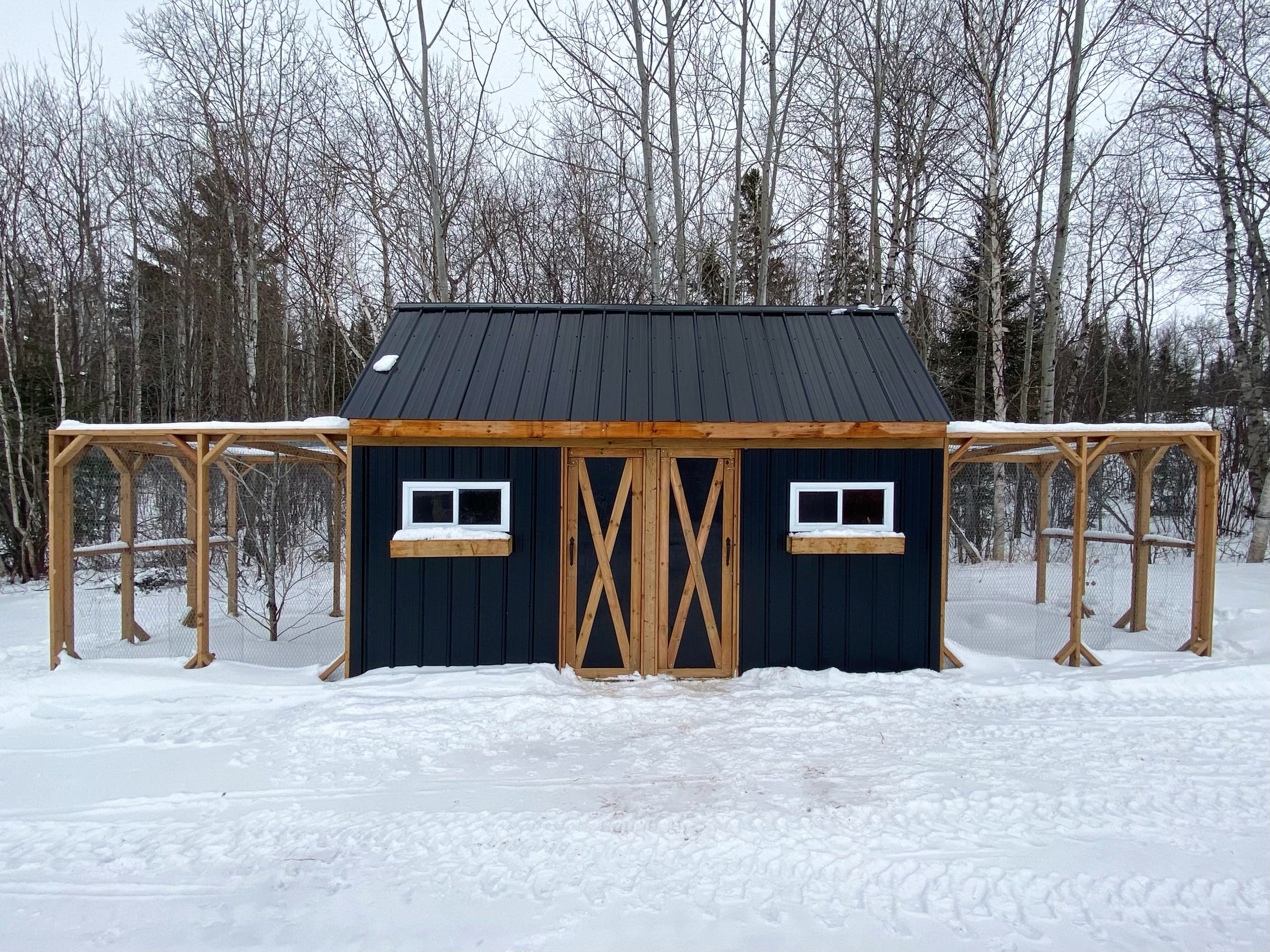
Akimbo, an on-line Canadian art site, publishes a page called Places + Spaces. Here they feature some of the more unique art spaces across the country. One of the most inventive venues on their recent list is Between Pheasants Contemporary. Located in northern Ontario in Kerns Township near the amalgamated communities of Temiskaming Shores, Between Pheasants is a long six-hour drive from Toronto. Founded by artist and PhD student, Alexander Rondeau on his family's farm, the exhibition space is situated in a pheasant coop. As Rondeau explains, the duplex building houses a chicken coop and a pheasant coop but the pheasants are only in their space in the summer and fall. Rondeau decided to dedicate the space "between pheasants" to an art gallery that would give "underrepresented artists," especially queer, trans, and/or two spirit artists, a place to exhibit their work. Since 2021, the venue has hosted twenty exhibitions, all of them documented with photographs and viewable on the Between Pheasants Contemporary website.
While such remote exhibition spaces may never draw the attention of heavy-hitter curators or mega-commercial gallery owners in Toronto or New York, they do have the benefit of generating local interest. As Rondeau explains in his Akimbo interview,
Many viewers who come to check out the space are curious and interested in the novelty of an art gallery in a coop, and are largely folks who would not otherwise be interested in engaging with contemporary art. Viewers consistently share that the coop – and the mud, hay, livestock, fields, and forest around it – are familiar, thus creating an inroad for engagement with queer and anti-colonial works that often present unfamiliar concepts to viewers (who are unlike a typical gallery’s audience). By ditching the white cube format in favour of plywood clad walls, the coop truly helps to facilitate generative and dynamic readings of the works by local audiences precisely because they are rooted in a familiar context. Many have even shared that visiting BPC is their first time seeing an art exhibition.
This response reminded me of Scapular Gallery Nomad, a mobile gallery created by Filipina artist, Judy Freya Sibayan. From 1997-2002, Sibayan wore a handmade scapular (a cloth pouch usually used to hold sacred items close to the body) containing small artworks around her neck wherever she went. She exhibited the artworks on request to whomever was interested in or curious about her unusual garb. As she travelled at home and abroad, Sibayan opened the gallery on city buses, on the street, and at social events, introducing contemporary art to a wide range of people in their own familiar settings.2
Rondeau has recently initiated a venture that has the potential to be equally transient and appealing to a wide-range of people. This past spring, Rondeau moved to California with his partner which has meant that he has had to temporarily curtail the schedule of exhibitions at Between Pheasants Contemporary. In the meantime, to continue supporting emerging artists, he "hatched" Covey Bouquet. The idea is that anyone can host an exhibition in any geographical location and in any kind of space — "a garage, a barn, someone else's chicken coop, or storage space." By connecting with Covey Bouquet, the curators and artists would have access to what Rondeau calls a "discursive network" that would support their efforts by hosting the on-line documentation, providing curatorial advice, and writing texts as needed. In August, for example, Covey Bouquet held its second exhibition. Sudbury, Ontario artist, Sage Turchan staged an exhibition of drawings and “smoke” paintings in an abandoned house not far from Between Pheasants. The exhibition was duly documented and Rondeau and Turchan are now in the process of completing the archival documentation that will be posted on the Covey Bouquet website.
Like Sibayan, Rondeau has created an alternate art institution that has no building and no fixed address. And, like Sibayan he is the caretaker of this enterprise. He serves as curator and director, selecting the artists and archiving the work. Rondeau's addition to the concept of a transcient art space is creating and supporting the exhibition framework on-line. On-line exhibitions, of course, are not new. There are many virtual gallery sites where artists exhibit their work, usually for a fee (Rondeau, on the other hand, volunteers his time and is not charging for his services). The difference with Covey Bouquet is that the website is not the primary exhibition venue, it is only the archive of a live exhibition that has happened somewhere, in some space, around the world. The website then contains the discursive evidence of the exhibitions which, in turn, establishes an exhibition history for the artist.
Inspired by the isolation of the far northern location where he grew up in Canada, Rondeau has proposed a unique project that could truly "facilitate generative and dynamic readings" of contemporary art. Covey Bouquet has the potential to not only provide that first, second, or third exhibition to isolated artists, it could also create a worldwide network of artists and communities that rarely have the opportunity to exchange and share their experience of contemporary art.
For more on Judy Freya Sibayan’s performances and galleries see my article, "The Visible and the Invisible: The Parodic Performances of Judy Freya Sibayan."