
Regular Animals?
Robots and Contemporary Art, Again.

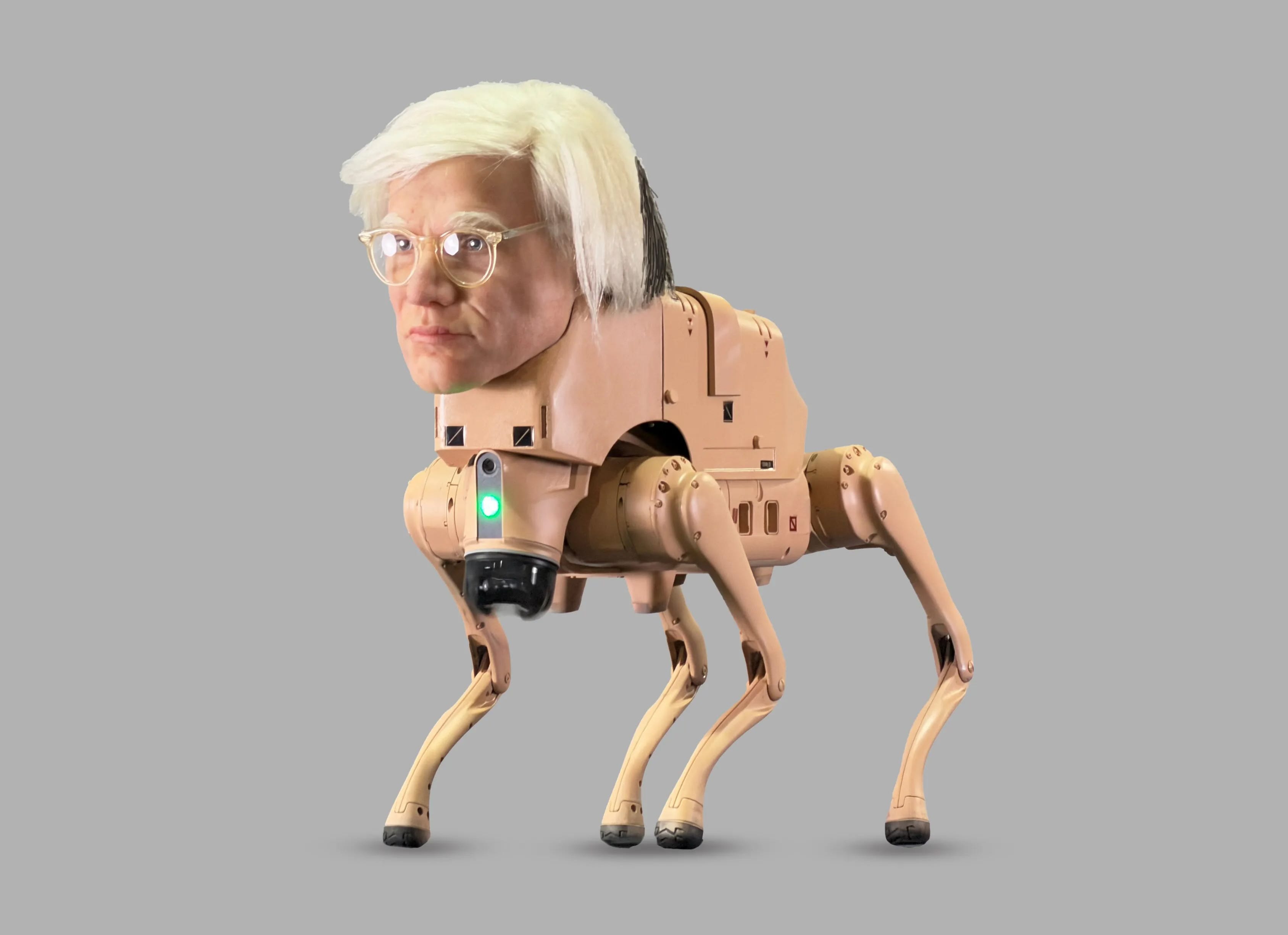
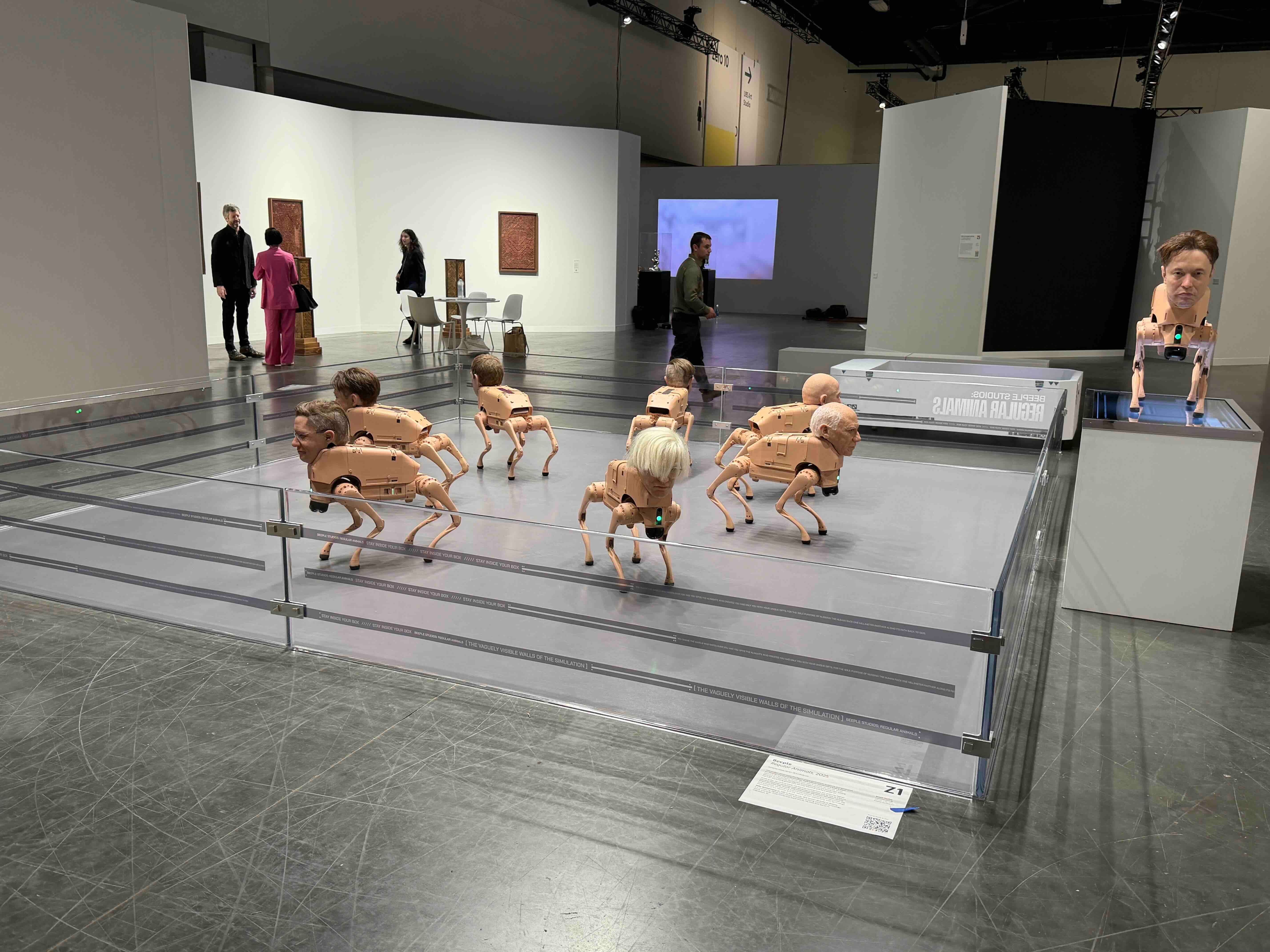
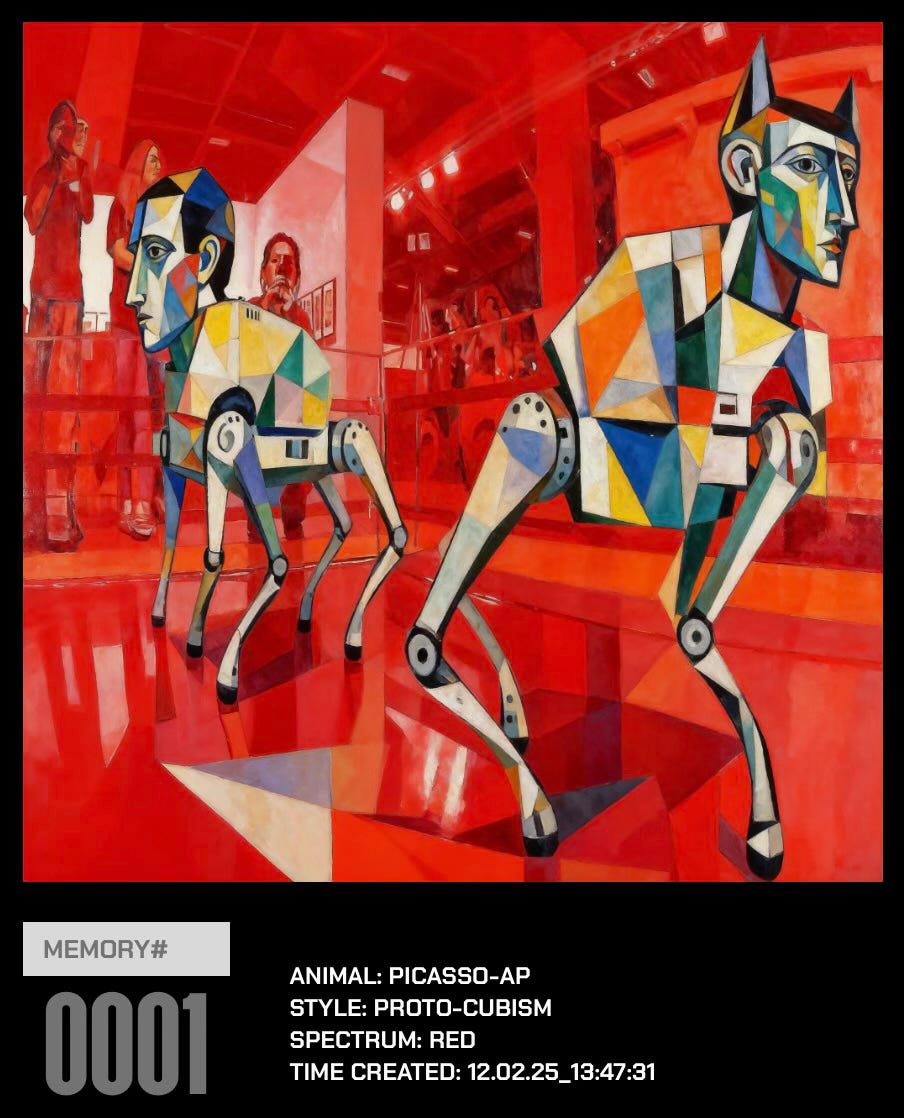
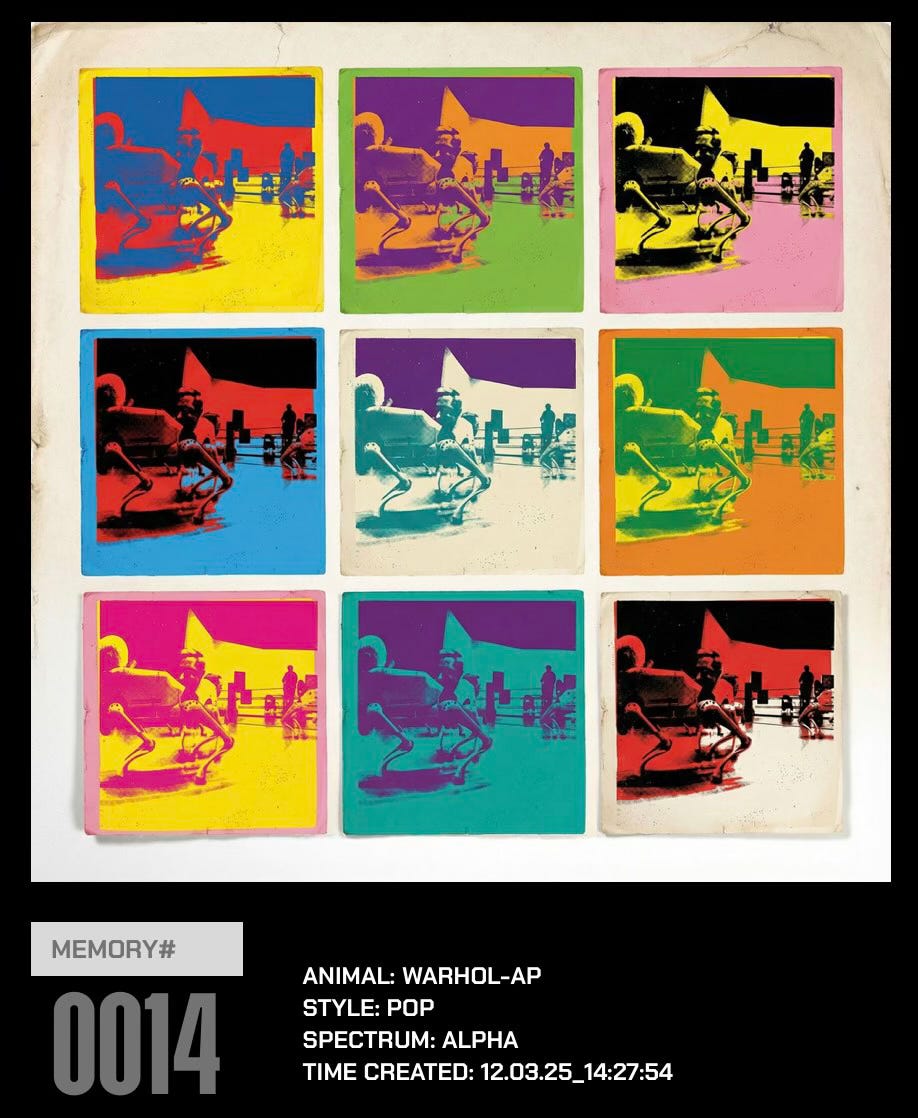
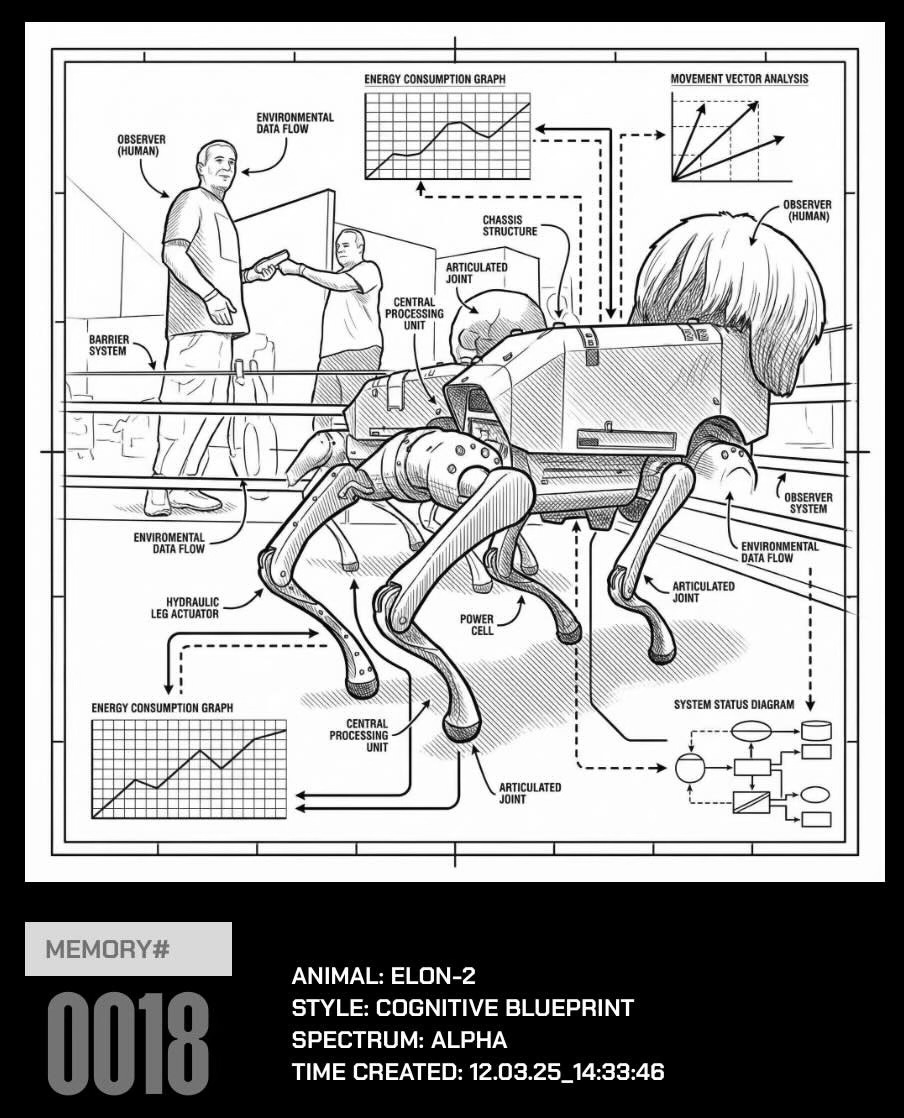
If you haven’t seen them yet you likely live on another planet. The internet is abuzz with images and video clips of robotic, pooping, human-headed dogs. Regular Animals, as the ensemble of robots is called, is the creation of Beeple and it was introduced at Art Basel Miami Beach this past week. The dogs, which sport life-like heads of Andy Warhol and Pablo Picasso, tech billionaires Elon Musk, Jeff Bezos, and Mark Zuckerberg, and Beeple himself, mill around in a fenced enclosure while visitors gawk and take pictures with their phones. Meanwhile the dogs are turning cameras on the enthralled crowd and using AI technology to transform the images into “artworks” that are then, as dogs will do, unashamedly pooped out on the floor. The Picasso-dog’s poop is a pastiche of a cubist painting while the Musk-dog poops a technical drawing. Each picture comes with a certificate of authenticity for the purchase of an NFT (Non-Fungible Token) of the same image. The dogs themselves quickly sold for $100,000 apiece.
What is Art Basel Miami Beach?
Art Basel is the premier contemporary art fair that started in Basel, Switzerland in 1970. Today it hosts fairs in Miami Beach, Florida, Hong Kong, Paris, and of course Basel. The word “fair” is a bit of a misnomer. Art Basel is really a high-end art market, not much different than your local craft market except that it only features the world’s premier galleries and contemporary art. The fairs are set up in large venues like convention centres and pre-approved commercial galleries pay a hefty price to have a booth to exhibit and sell their wares.
Who is Beeple?
Mike Winkelmann (b. 1981) is the man behind the pseudonym. He is an American graphic designer and animator who, in 2020, began creating NFT art. These are digital images that are stored on blockchains and only accessible by the owner. In 2021, Christie’s Auction House hosted the first auction of NFT art and sold one of Beeple’s images, Everyday: The First 5,000, for $69,000,000 in crypto currency. Beeple has since sold other works and created new works which, like Regular Animals, combine sculpture, installation, and AI produced imagery. Despite the Art World’s anxiety over AI-driven digital art and NFTs, Beeple has been given exhibitions at significant contemporary art venues such as Hong Kong’s M+, Mori Art Museum in Japan, The Shed in New York City, and the Los Angeles Museum of Contemporary Art.
Why pooping dogs that look like people?
Beeple doesn’t explain the dog part but does offer that he chose the life-like heads of tech billionaires because they are the ones who are deciding what “we see.” Their control of the most powerful and popular social media networks along with their immense wealth means that tech billionaires, rather than governments, schools, our friends, or our parents, manage how we understand the world.
Beeple also contends that Regular Animals challenge the way we think about art. The artist’s statement that accompanied the show asks, “What if the act of looking at art were no longer a one-way encounter, but part of a feedback loop in which the artwork observes, learns, and remembers us in return?” This is an interesting question. The dogs are both AI creatures and “artworks” that consume what is around them and turn these into “memories” that they excrete or "share with us. In this encounter, the viewer and the robot are both being shaped by (or learning from) their experience with one another. Beeple proposes that Regular Animals “invites us to reflect on how meaning is made – and unmade – when the tools that record our world begin to form their own worlds in response.”
Is it art?
Beeple’s Regular Animals could easily be mistaken for a humorous stunt or marketing gambit. Regular Animals was not presented by an exhibiter but by the organizers of Art Basel. We have to wonder if we found this work in a shopping mall would we understand it as art or just as a stunt to draw people’s attention? Stunts, cheeky jokes, and comical cats, after all, are great for making headlines. Introduced at Art Basel rather than at a mall, the robotic dogs are framed by a premier contemporary art event. The work is surrounded by art and galleries, titled like art, reported on by art-dedicated journals, and sold as art. It would be difficult then to deny Regular Animals its artistic status.
But is it good art?
Questions of quality rarely enter the equation when something as provocative as Regular Animals is first introduced into the Art World. By hosting Regular Animals, Art Basel is offering a proposition that it is art, and only time will tell if Regular Animals will be remembered as a pivotal work in art history.
Definitely, an interesting mix of robotics, AI, and contemporary art. I look forward to seeing where contemporary art goes from here. Thanks for reading and subscribing!
I hadn't seen this before but absolutely love it. Very interesting use of tech by Beeple, quite inspiring