
Being Seen
The Yukon Prize for Visual Arts

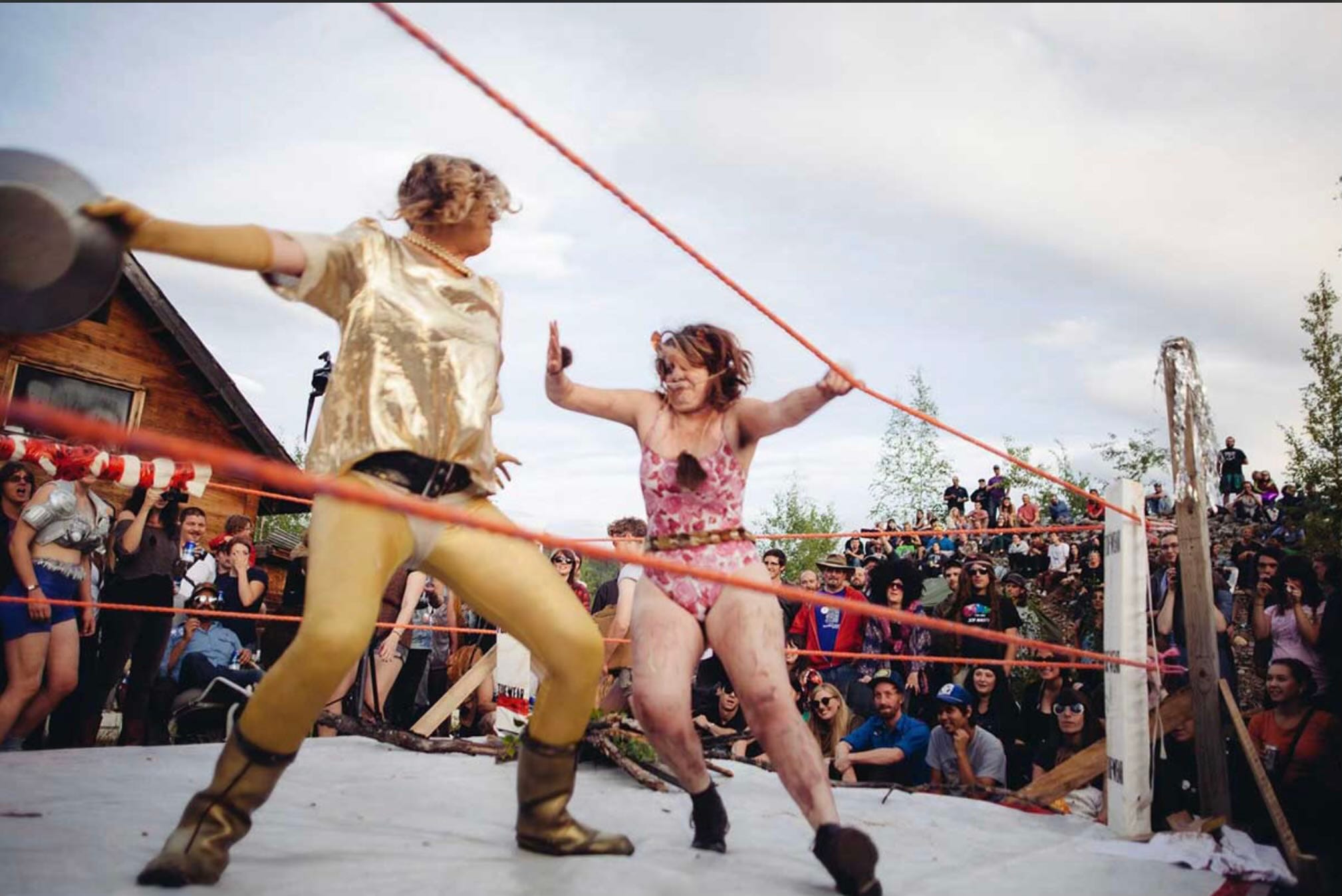
A challenge for artists everywhere is to be seen and be seen by the right people. This is especially true of artists in Canada’s northern territories: the Yukon, Northwest Territories, and Nunavut. Far from the artistic centres of Canada, the artists in these locations may never have a curator or gallery owner visit their studios let alone their communities. Likewise, when artists have an exhibition, few but the local residents see their work. In 2019, two generous donors decided to offer a remedy for this situation, at least, for the Yukon.
Julie Jai and David Trick, in partnership with the Yukon Art Foundation and Yukon Art Centre, have established the Yukon Prize for Visual Art. An award of $20,000 is given every two years to a Yukon artist who “demonstrates technical proficiency and reflects a unique artistic ‘voice’ in theme, method or practice, referencing traditions and/or the contemporary realm.” The prize money is meant to allow the artist to work full-time on their practice. But the greatest benefit is how the award introduces Yukon artists and brings them “into the national dialogue about art.”
Awards, as I explained in my last post, “The Gift” on the Praemium Imperiale, are not uninterested. While the award is meant to benefit the giftee, the giver is also rewarded. When corporations sponsor an award, for example, they gain publicity as well as a reputation for supporting the arts which may, in turn, improve the perception of their products and, as a consequence, their profits. When governments support an award, they are making a public statement about their values, both artistic and political. The Yukon Prize, on the other hand, is uniquely focused on the artists. Jai and Trick do not operate a large corporation or represent a government with their gesture. They are private donors with a personal and professional connection to the community. Jai and Trick have had a long relationship with the Yukon. Jai served as a legal advisor to the Yukon Government on land claim negotiations with Yukon First Nation (Ta’an Kwäch’än) and as Chief Negotiator on justice issues. She currently serves as a judge on the Ta’an Kwäch’än Council. Trick has had a long career in post-secondary education and administration in Ontario and now runs his own consultancy. The two make their home in both the Yukon and Toronto. If anything, the award will bring Jai and Trick a respected reputation as supporters of the arts in the community and beyond.
Tucked up next to Alaska in the far northwest corner of Canada, the Yukon is also a beneficiary of this award. The territory has long nurtured art and artmaking, but this is little known in the rest of Canada. Whitehorse, the capital, has a beautiful gallery at the Yukon Arts Centre which regularly features the work of local artists and occasional exhibitions by national and international artists. Dawson City, 500 kilometers north of the capital and situated within the traditional territory of the Tr’ondëk Hwëch’in, appears to be the most active art hub in the Yukon. This former Klondike Gold Rush town depends on tourism, mostly in the summer months. In 1999, the community arts organization, Klondike Institute of Art and Culture (KIAC), took over the historic Odd Fellows Hall where they opened The ODD Gallery, established an art residency program, and taught art courses as a way to nurture their town as a cultural centre. In 2007, KIAC formed a partnership with Yukon College (now Yukon University) in Whitehorse and established the Yukon School of Visual Arts, a one-year, university-credit art program. The program offers adventurous students an unique educational experience to study art in a northern community surrounded by the natural beauty of the Yukon River valley. The Yukon Prize now helps to celebrate these artistic activities and promote the Yukon as a creative centre in Canada.
As for the artists, they are the true stars and winners of this award. Unlike the Praemium Imperiale the artists are not well-known. The award process is designed to bring them into view. The process begins by naming a longlist of thirteen nominees and then honing these down to a shortlist of six artists. After the shortlist is announced in the Fall, the organizers hold a number of events in Whitehorse, including a group exhibition of work by the shortlisted artists at the Yukon Art Centre. Most notably, the award committee invites important people from Canada’s larger art centres to jury the prize. This means that the artists are introduced to key curators and art directors who must travel to the Yukon to view their work. This year, for example, the jury comprised Jean-François Bélisle, Director of the National Gallery of Canada in Ottawa, Sarah Moore Fillmore, Director of the Art Gallery of Nova Scotia in Halifax, and Dr. Heather Igloliorte, an Inuk art historian and curator who teaches at the University of Victoria on Vancouver Island. The publicity generated by these activities then introduces the artists to the public and brings them into the Canadian art dialogue.
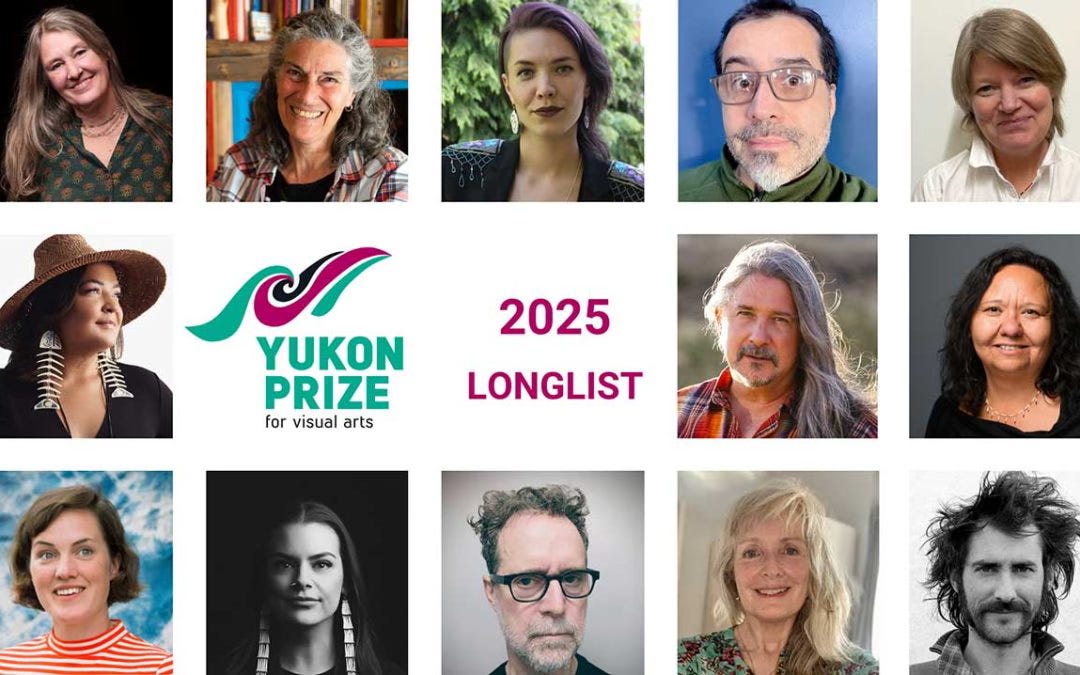
The 2025 winner of the Yukon Visual Art Prize, Aubyn O’Grady, was announced on October 4th during the Yukon Prize Celebration, a gala event held at the Art Centre in Whitehorse. Her work, for those of us who cannot travel to the Yukon, can be viewed by clicking on her name. The award website has provided generous artist profiles and images for all of the thirteen nominated artists. You can learn about these artists and enjoy their work below.
The ODD Gallery is currently seeking exhibition proposals. Regional, national, and international artists interested in “being seen” in a unique northern Canada contemporary art venue can apply for an exhibition at the ODD Gallery. The deadline for submission is March 21, 2026. Click here for more info.